
The Unique Challenges of Pharma Marketing
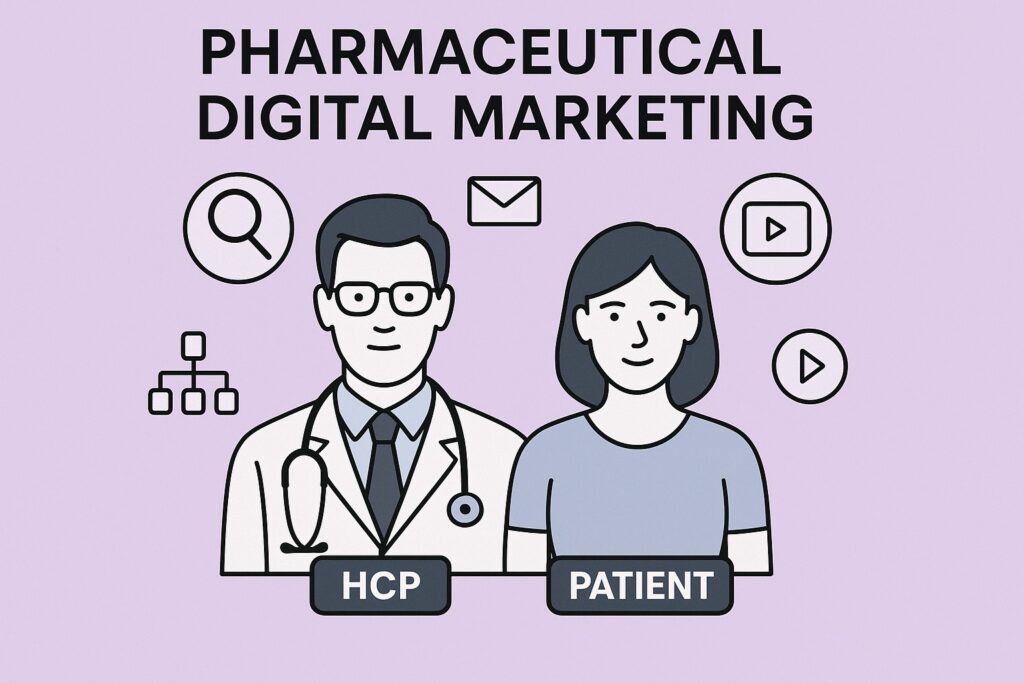
Digital marketing in pharma isn’t like fashion, CPG, or automotive. Every click, keyword, and headline is subject to FDA and FTC review. Ads must balance medical accuracy, risk disclosures, and brand tone while serving two entirely different audiences: Healthcare Professionals (HCPs) and Patients.
Common challenges include:
- Strict regulatory oversight (FDA’s Office of Prescription Drug Promotion – OPDP) on all DTC and HCP content.
- Keyword restrictions: terms implying diagnosis or cure can trigger rejection.
- Limited ad inventory: Meta and Google restrict promotion of prescription drugs, biologics, and even research antibodies.
- Fragmented audiences: physicians need clinical depth; patients need clarity and empathy.
- Privacy and data laws: HIPAA, GDPR, and CCPA govern every data touchpoint.
At Merkle / Dentsu, I launched Lantus (Insulin Glargine) for Sanofi, building both HCP and patient digital ecosystems—from search and display to CRM segmentation. Later, with 9 Digital Media, we led BioXCell’s digital growth, a B2B e-commerce platform serving biotech and research labs with monoclonal antibodies used in drug development.
These experiences taught one thing: pharma digital marketing succeeds only when data, compliance, and creativity work together.
Understanding HCP vs Patient Audiences Through Data and CDPs
Segment by Intent, Not Demographics
At Sanofi, we couldn’t just target “endocrinologists” and “diabetic patients.” We needed to identify intent—who was actively researching insulin titration protocols vs who was seeking lifestyle guidance.
We deployed a Customer Data Platform (CDP) to unify CRM, media, and email data. That platform segmented audiences into:
- HCP Cohorts: endocrinologists, nurse educators, primary care physicians.
- Patient Cohorts: newly diagnosed T2D patients, insulin-experienced users, and caregivers.
By layering behavioral signals—search intent, email engagement, sample requests—we delivered compliant personalization.
For BioXCell, our CDP segmented research scientists by therapeutic area (immunology vs oncology), purchase frequency, and funding cycle. That data allowed precise messaging: “Antibodies validated for PD-1 pathway studies” performed 2.4× better than generic “research antibodies.”
A CDP isn’t just a database—it’s the foundation for compliance, consent management, and personalization at scale.
Paid Search Best Practices in the Pharmaceutical Industry
Paid search in pharma is a minefield of compliance and cost inefficiency. During Lantus’ launch, our CPCs ranged from $7–$25 depending on query type—unsustainable without incrementality controls.
Measure Incrementality, Not Just Attribution
Branded pharma keywords (e.g., “Lantus insulin dosage”) tend to attract existing patients or physicians already aware of the brand. Incrementality testing helps quantify what portion of those clicks are truly influenced by paid media versus organic or referral.
We used geo-based A/B testing—pausing branded campaigns in matched markets to measure lift. Result: only ~30 percent of branded spend was incremental; 70 percent could be optimized away or moved to non-branded terms.
Structure Matters
We rebuilt the entire account structure: branded, non-branded, disease education, and HCP vs DTC campaigns. By isolating budget and audience segments, we cut CPCs by 40 percent and increased CTR by 25 percent.
Non-Branded Scaling
The real growth came from non-branded queries like “how to start basal insulin” or “insulin storage temperature.” Through weekly search query report analysis, ad copy testing, and geo-fencing for high prevalence regions, we expanded reach to education-focused audiences without violating claims rules.
For BioXCell, geo-fencing around research campuses like MIT and Stanford improved CTR by 60 percent while reducing CPC from $4.80 to $2.30.
SEO Do’s and Don’ts for HCP vs Patient Audiences
Pharma SEO is content strategy with a compliance heartbeat. Google’s E-E-A-T (Experience, Expertise, Authoritativeness, Trustworthiness) matters more here than anywhere else.
Focus on Lifestyle and Symptom Education
The best SEO doesn’t push products—it educates. For Lantus, we built five content pillars:
- Diabetes management lifestyle (“traveling with insulin”)
- Nutrition and meal planning
- Managing side effects
- Understanding HbA1c results
- Doctor discussion guides
These topics drove consistent organic traffic and captured email opt-ins for CRM nurture flows.
Leverage AI for Content Scale
At 9 Digital Media, we now use AI assistants trained on approved medical language to generate drafts that stay within brand voice and compliance. Human medical writers then fact-check and cite peer-reviewed sources. Result: production speed tripled, while maintaining FDA accuracy standards.
SEO Pitfalls to Avoid
- Don’t use comparative claims (“better than X drug”) without clinical citations.
- Don’t index unapproved PDFs or HCP content behind login.
- Always include PI ( Prescribing Information ) and ISI ( Important Safety Information ) links on every page.
Email Marketing for HCP Lifecycle Management
Email remains the most reliable HCP engagement channel. Open rates for personalized medical updates can exceed 45 percent if timed and segmented correctly.
Segment by Lifecycle
- New HCPs: Onboarding series introducing mechanism of action (MOA), clinical data, and access to samples.
- Active HCPs: Educational updates, case studies, and patient management tips.
- Inactive HCPs: Triggered re-engagement based on conference attendance or sample ordering history.
We saw engagement lift of 60 percent simply by re-segmenting inactive lists by specialty and region and personalizing subject lines (“Endocrinology insights for your practice this quarter”).
Compliance Essentials
- Include unsubscribe and privacy statements aligned with CAN-SPAM and GDPR.
- Never send patient data without explicit HIPAA-compliant consent.
- Archive every email version for audit trails.
YouTube and Video Content for Pharma
Video is now the most consumed format for medical education. But pharma brands must differentiate between HCP-directed and patient-directed content.
For HCPs:
- Focus on scientific credibility—MOA animations, clinical trial summaries, and KOL discussions.
- Gate access via professional verification (e.g., Veeva CRM integrations).
- Example: Pfizer’s “Science Will Win” YouTube series balances storytelling with science credibility.
For Patients:
- Prioritize empathy and accessibility (plain language, clear disclosures).
- Example: AbbVie’s Humira videos focus on daily life with chronic conditions, not the drug itself.
- Always end with ISI visuals and links to Prescribing Information.
YouTube can also serve as a re-marketing channel for approved site visitors, ensuring ad targeting remains within FDA and Google Healthcare policies.
Paid Social in Pharma: From Static to Storytelling
Meta and LinkedIn are tightening controls on health ads. Static banner ads rarely pass review and underperform. Video and UGC-style creative offer a path forward.
Continuous Test-and-Learn Framework
- Creative Testing: 3–5 new videos per month across formats (15-sec explainers, KOL clips, animated mechanisms).
- Whitelisting: Run through verified HCP or educational partner accounts for credibility.
- Measurement: Track engagement rate, view-through conversions, and survey recall lift rather than CPC alone.
UGC and Trust
Peer-to-peer education is powerful. For BioXCell, lab technicians recorded short clips explaining antibody validation processes. These UGC-style videos outperformed corporate ads by 4× in CTR and reduced cost per lead by 35 percent.
Compliance and Disclosure Requirements
Ad Disclosures
- Every Rx drug ad must contain “fair balance” of benefits and risks.
- Include Important Safety Information (ISI) and link to Prescribing Information (PI).
- Use FDA-approved language only; no off-label promotion.
Website Disclosures
- Prominent ISI on all relevant pages.
- Accessibility and privacy statements complying with ADA and HIPAA.
- Cookie consent for data tracking under CCPA/GDPR.
- Clearly segregate HCP and patient sections.
Legal Frameworks to Know
- FDA 21 CFR Part 202 (Advertising for Prescription Drugs)
- HIPAA Privacy Rule
- CAN-SPAM Act of 2003
- GDPR & CCPA for data handling
Violations aren’t minor — in 2023, OPDP issued warning letters to companies for missing ISI on social ads. Compliance is a growth advantage when done right.
The Future of Pharma Digital Marketing
AI, privacy, and personalization will define the next five years of pharma marketing. Success will belong to brands that:
- Centralize data in a CDP for real-time audience management.
- Invest in educational content over promotional messaging.
- Build cross-functional compliance partnerships between marketing and medical affairs.
At 9 Digital Media, we combine agency speed with regulatory discipline. With a team of 16 digital experts spanning PPC, SEO, email, content, and analytics, we help pharma and biotech brands modernize their digital ecosystems—without risk.
About the Author
Akin Tosyali
Founder & CEO, 9 Digital Media
Former Head of Digital Strategy, Merkle | Dentsu
Recent Comments